




Secured Vs Unsecured Credit Cards India
Many first-time credit card users apply for a regular credit card and get rejected without clearly understanding why. The is usually a lack of credit history, limited income proof, weak banking relationship or an internal eligibility mismatch. This is where secured and unsecured credit cards become important.
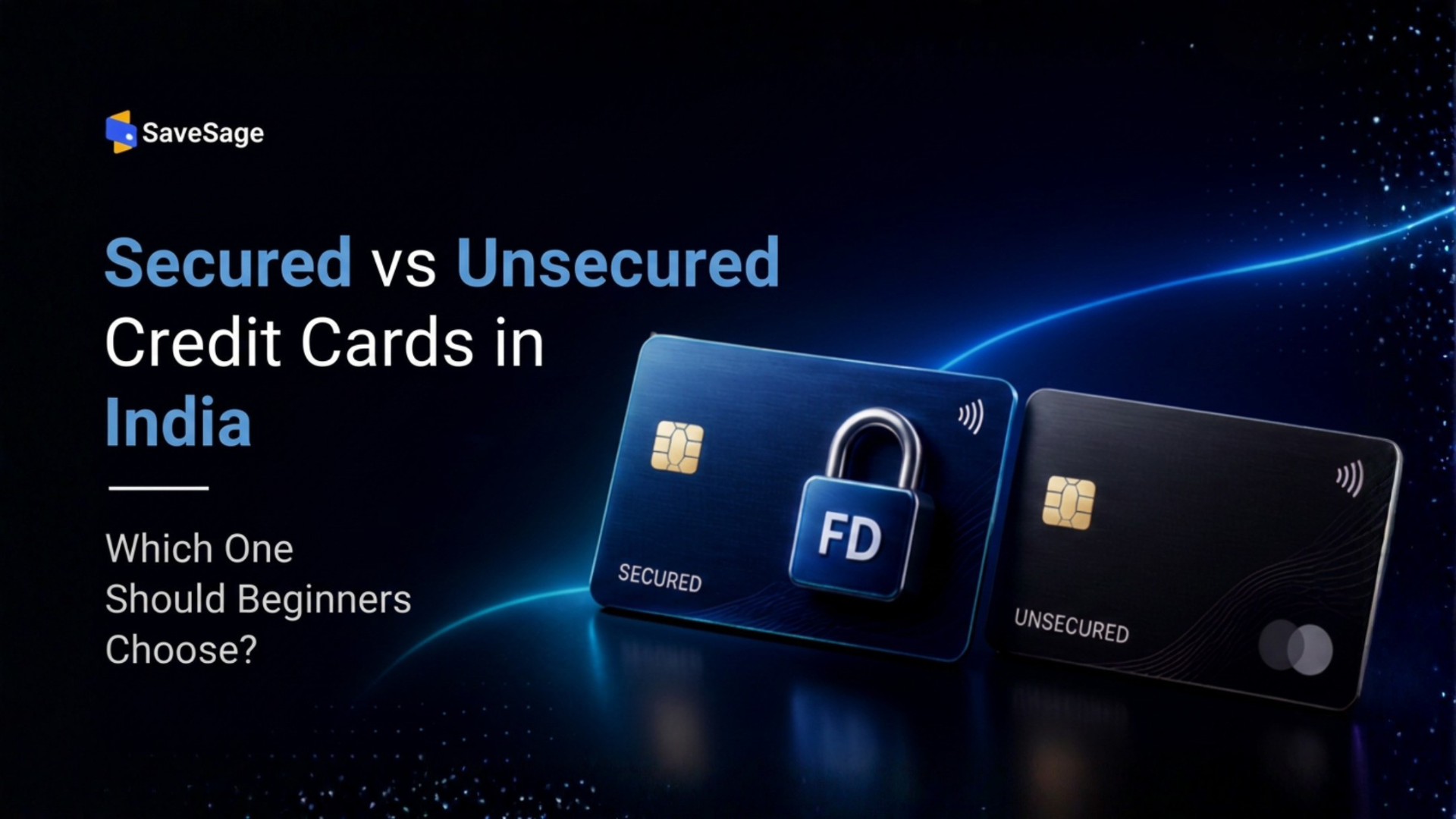
A secured credit card is backed by a Fixed Deposit and is usually easier for beginners with no credit history. An unsecured credit card does not need a deposit, but approval depends more on income, credit score, repayment history and the bank’s internal checks. Both can help you access credit, but the right choice depends on your current profile.
What Is a Secured Credit Card?
A secured credit card is usually backed by a Fixed Deposit. You place an FD with the bank, and the bank issues a credit card against that deposit, usually with a limit of around 80% to 90% of the FD value. Some specific cards may offer up to 100% of the FD value as the credit limit.
The FD acts as security for the bank, which lowers the bank’s risk and makes secured cards easier to get for users who are new to credit, have no credit score, have limited income proof or have been rejected for regular cards earlier.
Your Fixed Deposit usually continues to earn interest even while it is marked as security for the card. So the FD is not simply sitting idle, but it may be blocked while the credit card is active. In simple terms, this means you usually cannot freely withdraw or close that FD until the card is closed or the lien is released.
For many beginners, a secured credit card is a practical starting point. If you pay your bills on time and keep your credit utilisation low, it can help you build repayment history and improve your credit profile over time.
What Is an Unsecured Credit Card?
An unsecured credit card is the normal credit card most people think of. It does not require a fixed deposit or any collateral. Instead, the bank approves you based on your financial profile, which can include your income, credit score, employment type, existing loans or cards, repayment history, banking relationship and internal eligibility checks.
Unsecured cards usually come in more types. Some focus on cashback, some on travel rewards, some on fuel savings, some on UPI spends, and some on premium benefits like lounge access, dining offers or milestone rewards. They are useful when you already know where you spend the most and your profile is strong enough to get approved.
The challenge is approval. If you have no credit history, no stable income proof or a weak banking profile, getting an unsecured card can be harder. That is why many beginners face rejection when they directly apply for regular cards.
Secured vs Unsecured Credit Cards: Key Differences
Factor | Secured Credit Card | Unsecured Credit Card |
|---|---|---|
Backed by | Fixed deposit | No deposit required |
Approval ease | Easier for beginners | Depends on profile |
Credit score need | Can work with no or limited score | Usually needs a stronger profile |
Income proof | more flexible | Usually more important |
Credit limit | Usually around 80% to 90% of FD value; select cards may offer up to 100% | Based on bank assessment |
Best for | Students, freshers, rejected applicants, users with no credit history | Salaried users, self-employed users with income proof, users with credit history |
Main caution | FD may be marked or liened by bank | Rejection risk may be higher if profile is weak |
The main difference is the approval route. A secured card is easier for new users because the FD reduces the bank’s risk, while an unsecured card depends more on income, credit score, repayment history and overall profile strength. So beginners should first check which card they are more likely to get approved for, and then compare benefits.
Who Should Get a Secured Credit Card?
A secured credit card can be a good option for:
Students
Freshers
Users with no credit score
Users with limited income proof
Users whose previous credit card application was rejected
People who want to build credit safely
If your credit profile is still new, an FD-backed card can be a safer starting point than applying for multiple regular cards and facing repeated rejections. It lets you start using credit, build a repayment record and improve your chances of getting better cards later.
A secured card also does not have to be permanent. After using it responsibly for 6–12 months, you can check pre-approved offers or apply for an unsecured card that matches your income and spending pattern.
Who Should Get an Unsecured Credit Card?
An unsecured credit card may make more sense if you are salaried with regular income, because banks can assess your repayment ability more easily. It can also work for self-employed users who have ITRs, bank statements or other income proof.
It is usually better suited for users who already have a healthy credit score, a good banking relationship or pre-approved offers from their bank. In these cases, you may not need to lock money in a Fixed Deposit just to get started.
Unsecured cards can also be useful if you are looking for specific benefits such as cashback, travel rewards, fuel savings, UPI rewards or premium card features. But those benefits matter only if the card fits your income, spending pattern and repayment ability.
Common Mistakes Beginners Should Avoid
Applying for too many unsecured cards after one rejection: This can create multiple enquiries and make your profile look weaker.
Ignoring FD-backed cards because they sound less premium: A secured card can be the easier and cleaner starting point when approval is the main issue.
Choosing a card only for rewards without checking approval chances: Rewards do not matter if your profile does not match the card’s eligibility.
Missing payments on the first card: Late payments can hurt your credit profile early and make future approvals harder.
Using too much of the available credit limit: High utilisation can make it look like you are dependent on credit.
Closing the first card too early without building credit history: Your first card can help create account age, so closing it too soon may reduce its long-term value.
Before applying again after rejection, users should check why their credit card application may have failed. This can prevent repeated rejections and help them choose a more suitable card.
A common beginner-friendly rule is to keep usage around or below 30% of the available limit where possible. For example, if your card limit is ₹20,000, keeping monthly usage around ₹6,000 or lower can show more controlled credit behaviour.
After Your Secured Card: When and How to Upgrade
Getting a secured card is the first step, not the final destination. In the first 3 months, use the card for small regular spends such as groceries, bills or subscriptions. Pay the full outstanding amount before the due date every month, and set up autopay if possible so you do not miss a payment.
After around 6 months, your repayment behaviour may start reflecting more clearly in your credit report. This is a good time to check your credit score and see whether your credit history has started building.
After 12 months of clean usage, you can check your bank app for pre-approved unsecured card offers. Apply for one card that matches your actual spending pattern, whether that is cashback, UPI rewards, travel, fuel or dining.
When you get an unsecured card, do not close the secured card immediately without thinking. The age of your oldest credit account can help your credit profile over time. If the secured card has no major cost, you can keep it active, use it occasionally and pay it off on time.
Which One Is Better for Beginners?
For most beginners with no credit history, a secured card is the safer starting point because it is easier to get and helps build repayment history. But if you already have a stable income, a healthy credit score and a good bank relationship, an unsecured beginner card may make more sense. Choose a secured card when approval is the main concern, and an unsecured card when your profile is already strong enough for better rewards or flexibility.
Once you have your card and want to know how reward points work, which card earns the most for your spending, and when the right time to upgrade is, SaveSage tracks all of that in one place.
FAQs
What is the difference between a secured and unsecured credit card in India?
A secured card is backed by a Fixed Deposit. An unsecured card is approved based on income, credit score, and banking history. If you have no credit history, a secured card is the right starting point.
Does a secured credit card build credit score?
Yes. A secured credit card can help improve your credit profile when you pay the full bill on time, avoid missed payments and keep your credit utilisation low. For example, using only a small part of your limit and clearing dues before the due date shows responsible credit behaviour.
Is an unsecured credit card better than a secured credit card?
Not always. An unsecured card may offer better flexibility and rewards, but a secured card may be better for users with no credit history or limited income proof.
Can I get an unsecured credit card without a credit score?
It may be difficult, but not impossible. Approval can depend on income, employment type, bank relationship and internal eligibility checks.
When should I move from a secured card to an unsecured card?
After building a clean repayment record for 6–12 months, you can check pre-approved offers or apply for a suitable unsecured card that matches your income and credit profile.