





What Is a Credit Card Grace Period? How the Interest-Free Period Works
Ever wondered how some people use their credit cards every month and never pay any interest? The answer is the credit card grace period, also known as the interest-free period. It is the interest-free time between your statement generation date and your payment due date.
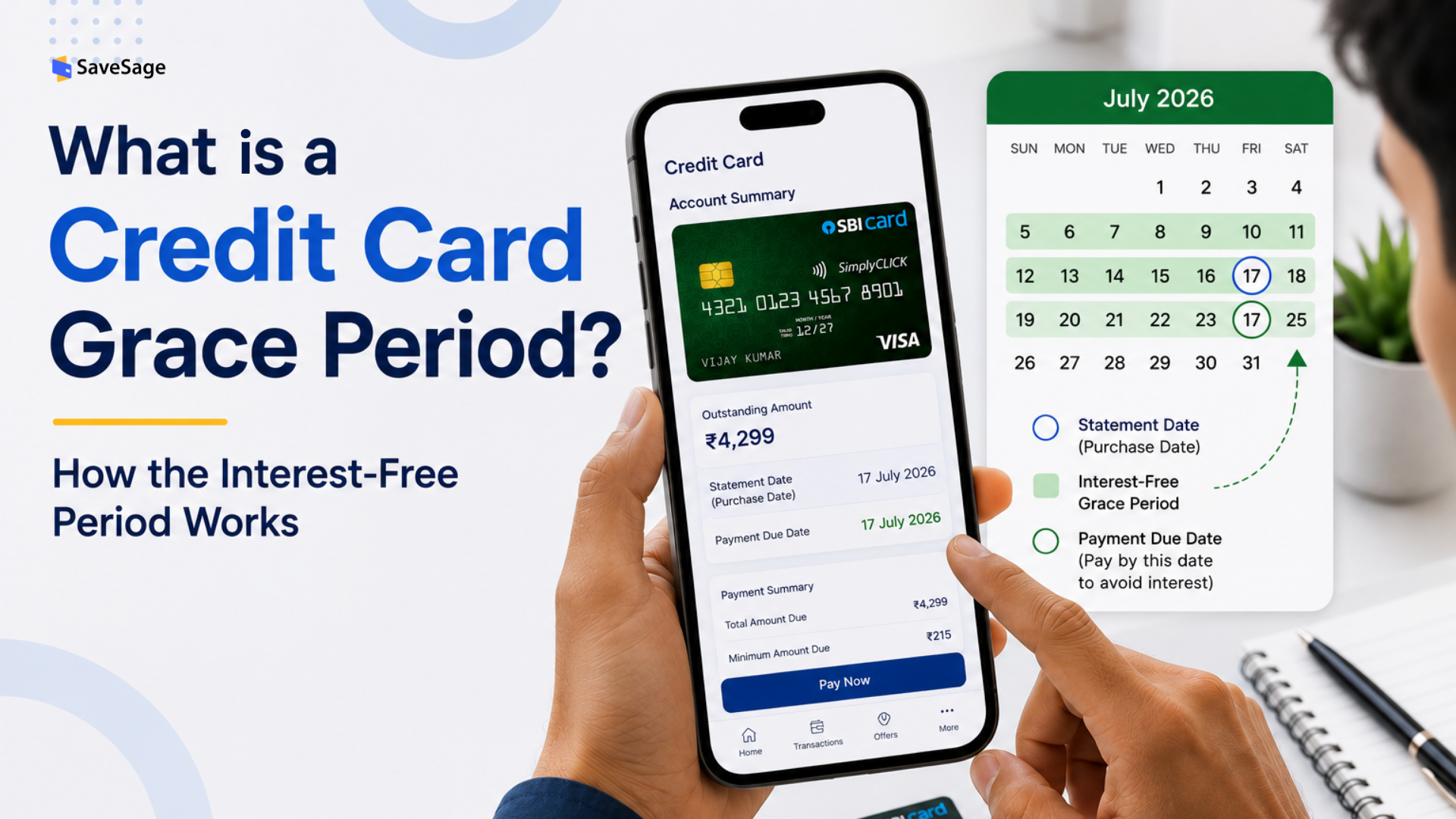
Most credit cards in India offer an effective interest-free period of up to 45-50 days, provided you pay your previous statement in full. Miss that one condition and interest can start accumulating much sooner than most people expect. Here's how the credit card grace period works and how you can make the most of it.
What Is a Credit Card Grace Period?
A credit card grace period is the time during which you can pay for your purchases without being charged interest. It begins after your billing cycle ends and lasts until your payment due date. This interest-free benefit is available only if you paid your previous statement in full.
If you carry forward even a small unpaid balance, most banks remove the grace period. Paying your bill in full every month is also one of the easiest ways to avoid credit card fees and penalties. From then on, interest starts accruing on the outstanding amount and on new purchases too until you clear the full balance.
Quick Tip: Paying only the minimum amount due usually means you'll lose your grace period, even though your account remains in good standing.
Since every bank follows its own billing cycle and due-date schedule, it's always worth checking your card's terms instead of assuming the same number of interest-free days. If some of these terms sound unfamiliar, our guide to Credit Card Terms Explained: Must-Know Terms for Every Indian Cardholder (2026) breaks them down in simple language.
How Does the Credit Card Grace Period Work?
One common misconception is that every purchase gets a fixed 45 or 50 days. It doesn't. Your interest-free period depends on when you make the purchase during your billing cycle.
Say your card follows this schedule:
Item | Example |
Billing Cycle | 1 June to 30 June |
Statement Date | 30 June |
Payment Due Date | 20 July |
If you make a purchase on 2 June, you'll get almost 48 days before payment is due.
If you make the same purchase on 29 June, you'll have only about 21 days.
In simple terms, purchases made immediately after your statement is generated receive the longest possible interest-free period.
Which Transactions Get a Grace Period?
Not every credit card transaction qualifies for an interest-free period.
Transaction | Grace Period |
Retail purchases | Yes |
Online purchases | Yes |
Cash withdrawals | No |
Balance transfers | Depends on the offer terms |
EMI conversions | Original purchase qualifies; EMI interest and processing charges apply separately |
Cash withdrawals are the biggest exception. Interest starts from the day you withdraw cash, plus banks charge a cash advance fee. Converting a purchase into EMI does not remove the interest-free period on the original transaction. However, you'll still pay the agreed EMI interest and processing charges though.
How to Maximise Your Credit Card Grace Period
Using the grace period wisely is one of the easiest ways to avoid unnecessary interest charges. A few simple habits help:
Pay your full statement balance, not just the minimum amount due.
Make large purchases early in your billing cycle to maximise the interest-free period.
Enable AutoPay for the full outstanding amount to avoid accidental delays.
Track payment due dates if you use multiple credit cards.
Avoid spending beyond what you can comfortably repay, even when you still have available credit.
Need help getting started? Here's a step-by-step guide to setting up AutoPay for your credit card bill.
What Happens If You Miss the Due Date?
Missing your due date doesn't just attract a late payment fee. If you don't pay your entire statement balance, you generally lose your grace period. Interest starts accruing on your outstanding balance.
In most cases, new purchases begin attracting interest from the transaction date until the outstanding amount is fully cleared. That's why paying only the minimum amount due can become much more expensive than many cardholders realise.
How Do You Get Your Grace Period Back?
The good news is that losing your grace period isn't permanent. To restore it, pay your outstanding balance in full. Once you've cleared the entire amount due, the interest-free period is usually reinstated from your next billing cycle, subject to your card issuer's terms. After that, as long as you keep paying every statement in full and on time, you'll continue enjoying the grace period on eligible purchases.
Knowing how the grace period works is only half the job. The real challenge is remembering every payment due date, especially if you use more than one credit card. SaveSage helps you keep track of your bills, reward points and upcoming due dates in one place, so you can make the most of your interest-free period and avoid paying unnecessary interest.
Frequently Asked Questions
What is a credit card grace period?
A credit card grace period is the interest-free window between your statement date and payment due date. It’s available only if you've paid your previous statement balance in full.
How long is the credit card grace period in India?
Most credit cards offer an effective interest-free period of up to 45-50 days, depending on your billing cycle and purchase date.
Do cash withdrawals get a grace period?
No. Paying only the minimum amount due keeps your account from becoming overdue, but in most cases you'll lose your interest-free period. Interest continues to accrue on the unpaid balance and may also apply to new purchases until the outstanding amount is fully cleared.
What happens if I pay only the minimum amount due?
Your account stays in good standing. You generally lose your grace period, so interest continues on the unpaid balance and, in most cases, on new purchases until the outstanding amount is fully repaid.
Will a 2-day late payment affect my CIBIL score?
A two-day delay does not automatically affect your CIBIL score. Credit card issuers generally report payment information to credit bureaus periodically, not immediately after the due date. However, you may still have to pay applicable late payment fees and interest. To avoid any impact on your credit history, pay your outstanding amount as soon as possible and avoid repeated late payments.