




Best Lifetime Free Credit Cards in India: Are They Better Than Paid Cards?
Many people assume lifetime free credit cards are basic, weak, or useful only for beginners because they don't charge an annual fee. That's not always true. Sometimes that "basic" card is quietly outperforming a premium one. Sometimes it's simply a card that costs you nothing to hold.
The absence of an annual fee can make a card more rewarding in practice, especially when its benefits closely match your regular spending. The smarter choice isn't always the card with the highest reward rate. It's the one that gives you better net value after fees, caps and actual usage are accounted for.
Quick Answer
A lifetime free credit card can beat a paid card when its rewards match your spending and the paid card's extra benefits aren't enough to recover its annual fee. Amazon Pay ICICI can work well for Amazon shoppers, YES BANK Klick for eligible UPI users, while IDFC FIRST Wealth and IndusInd Tiger offer more travel-oriented benefits. A paid card may still offer better value for high spenders who can fully use its rewards, milestones and premium benefits.
If this is your first card, it may also help to understand how to get your first credit card in India before choosing between lifetime free and paid options.
What Is a Lifetime Free Credit Card?
Cards commonly described as “free” generally fall into four different fee structures:
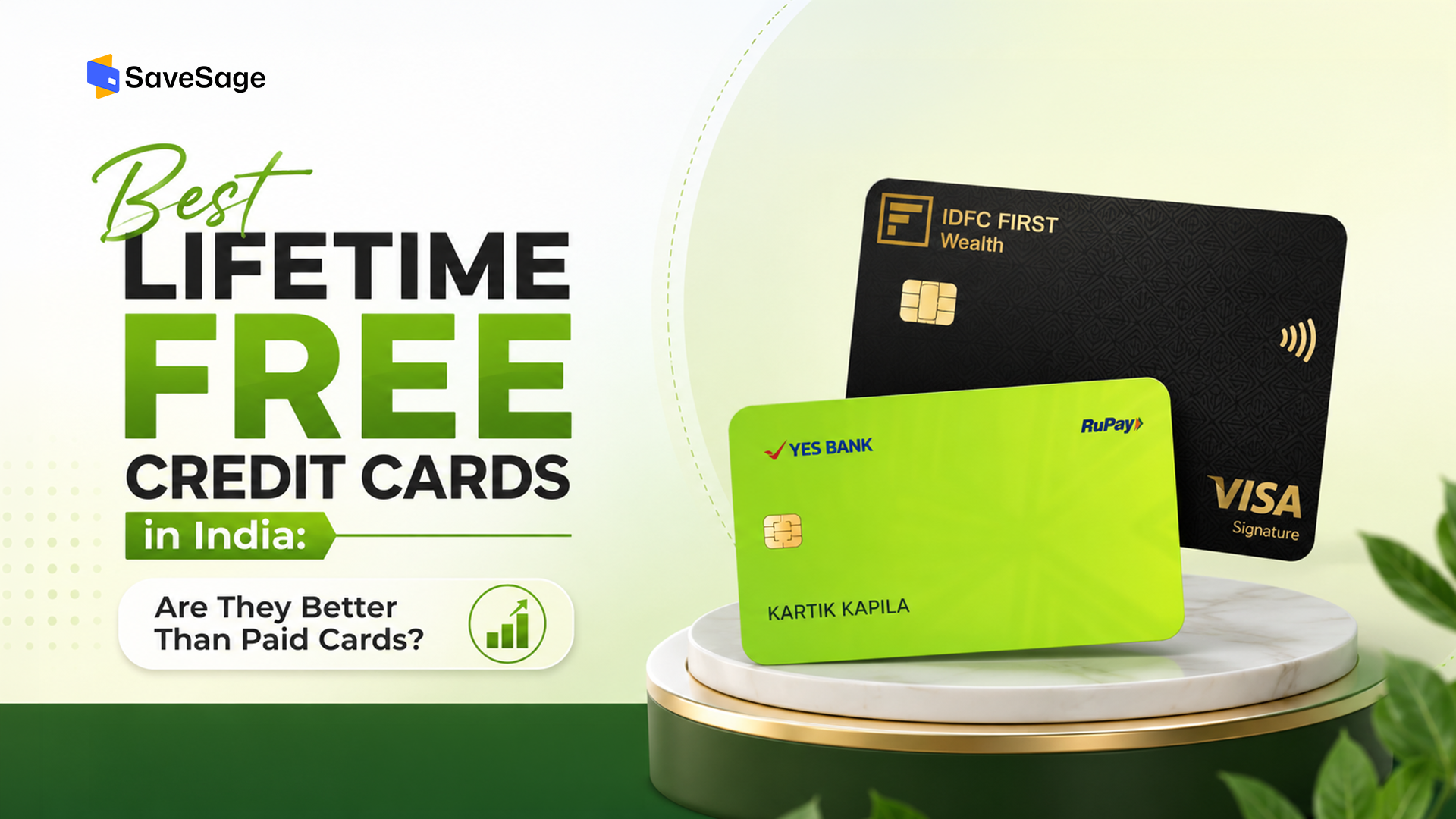
Genuinely lifetime free cards carry no fee in their standard pricing at all, with no income threshold, no annual spend target and no condition tied to the waiver. Cards like the YES BANK Klick, Amazon Pay ICICI, HSBC Visa Platinum, IDFC FIRST Wealth and IndusInd Tiger fall into this group.
Conditionally or promotionally free cards carry a fee in their standard pricing that is currently being waived, either through a limited-period offer or after meeting a specified spending threshold. The CSB Jupiter Edge+ is a partial example, since it has a one-time joining fee but no annual fee.
This is worth checking carefully, because promotional "lifetime free" offers can expire without much warning, after which the card reverts to its standard fee. This is one of the most common sources of confusion with LTF cards, so always confirm whether the ₹0 fee is permanent pricing or a current promotion, ideally by checking the official Key Fact Statement rather than the headline marketing claim.
Either way, lifetime free refers to the card fee only. Interest, late payment charges, GST, cash withdrawal fees, EMI processing charges and forex markup can still apply depending on how the card is used.
If terms like annual fee, minimum due, statement cycle, finance charges or credit limit feel confusing, this credit card terms guide can help before you compare card offers.
Why Lifetime Free Credit Cards Can Be Valuable
If you're applying for your first credit card, getting it as lifetime free can be genuinely useful. There's less pressure to close it later just because an annual fee is due. Keeping an older account active, paying on time and maintaining low credit utilisation can help build a longer credit history, which may positively influence your credit score. The LTF status itself doesn't directly improve your score, but the habits it makes easier to keep up with often do.
Here's where it gets interesting for everyone else too. A simple break-even example makes the math easy to see. Say a paid card has a total annual cost of ₹3,000, including applicable taxes, and earns 1.5% cashback, while a free card earns 1% with no fee at all.
At ₹15,000 a month in spending, which is ₹1,80,000 a year, the paid card earns ₹2,700. That's not even enough to cover its own fee, leaving you ₹300 worse off. The free card earns ₹1,800, and every rupee of that is net gain since there's no fee to subtract.
Annual Spend | Paid Card at 1.5% | After ₹3,000 Cost | LTF Card at 1% |
₹1.8 lakh | ₹2,700 | -₹300 | ₹1,800 |
₹6 lakh | ₹9,000 | ₹6,000 | ₹6,000 |
The paid card only starts winning once your spend crosses roughly ₹6 lakh a year. That's the point where its extra 0.5% finally earns more than the ₹3,000 fee it charges. This is the kind of math worth doing before assuming a higher reward rate automatically means a better card.
In short: the higher reward rate is not always the better deal. What matters is the value left after subtracting the annual fee.
This is also why reward categories matter. A card may look strong on paper, but the actual value changes if your spends fall under excluded or low-reward merchant categories.
Lifetime Free vs Paid Credit Cards: The Actual Difference
Factor | Lifetime Free Credit Card | Paid/Premium Credit Card |
Annual fee | ₹0 if issued as LTF; for promotional offers, confirm the offer is active when applying | Low, mid-range or premium |
Fee recovery pressure | No annual fee to recover | Must recover fee through rewards or benefits |
Best for | Beginners, moderate spenders, category-specific users | High spenders, frequent travellers, premium benefit users |
Risk of low usage | Lower, since no fee is charged regardless | Higher, since unused benefits waste the fee |
Reward potential | Often moderate but more beneficial due to no fees | Can be higher but frequently capped or conditional |
Lounge access | Available only on select LTF cards, such as IDFC FIRST Wealth and IndusInd Tiger | More common across the category, often with higher usage limits |
Lifetime Free Credit Cards Worth Considering in 2026
You don't need six deep-dive reviews to pick the right card. Here's the shortlist, with one clear reason to consider each and one thing to watch out for.
Card | Why Consider It | Main Caution |
YES BANK Klick (KIWI) | UPI Scan & Pay rewards | Existing YES BANK cardholders aren't eligible |
Amazon Pay ICICI | Strong Amazon cashback with no fee | Rewards arrive as Amazon Pay balance |
Jupiter Edge+ | Shopping, travel and eligible UPI/card cashback | Standard ₹499 joining fee is currently waived under a limited-period offer; reward caps also apply |
IDFC FIRST Wealth | Premium-style travel benefits and low forex | High income eligibility and spend-gated perks |
HSBC Visa Platinum | No-fee rewards with airline-mile conversion | Reward value depends on how points are redeemed |
IndusInd Tiger | Lounge, golf, low forex and accelerated rewards | Highest reward multiplier applies only at higher annual-spend slabs |
Note: Check eligible transactions, reward caps, excluded categories and redemption conditions before applying to any of these cards.
CSB Jupiter Edge+ RuPay Credit Card
The card normally carries a ₹499 joining fee and no annual fee. However, Jupiter is currently waiving the joining fee under a limited-period offer, making it ₹0 joining fee and ₹0 annual fee for eligible applicants who apply while the promotion is active.
Standard joining fee: ₹499, although it is currently waived under a limited-period promotion
Annual fee: ₹0
The card offers accelerated rewards on selected shopping, travel and eligible UPI/card transactions
Check reward caps, excluded categories and redemption value before applying
Confirm that the ₹0 joining-fee offer appears on your application page and retain proof of the fee terms offered to you
IDFC FIRST Wealth Credit Card
A rare premium-style card with no joining or annual fee and a low 1.5% forex markup. It's one of the few LTF cards that gets close to a genuinely premium experience.
Airport lounge and golf benefits require ₹20,000 in qualifying spends: monthly spending to activate lounge access for the next month, and ₹20,000 within a statement cycle for golf
Annual-income eligibility is ₹36 lakh or more
Reward points earned from the July 2026 statement cycle expire after 24 months, instead of staying valid indefinitely
The reward structure changed effective 18 June 2026, including 10X points from the first eligible transaction on dining, travel and international spends, so it's worth checking the current earn rate for your typical categories before writing this off as a low-reward card
These examples show that lifetime free cards aren't one single category. A card can be genuinely free and still be highly targeted: useful for Amazon shoppers, UPI-first spenders or frequent travellers, but not necessarily right for someone outside that specific use case.
What to Check Before Applying
Before applying for a lifetime free credit card, check whether it actually fits your spending instead of choosing it only because it has no annual fee.
Don't skip these:
Whether the card has a joining fee even if the annual fee is waived
Whether the ₹0 fee is permanent pricing or a limited-period promotion
The actual reward rate and redemption value, and whether the card's reward categories match your actual spending. A 5% card that excludes your main spend categories is worth less than a 2% card that doesn't
Monthly, merchant-wise or category-wise reward caps. Some cards cap cashback or points at a level that limits real earnings even before exclusions apply
Excluded categories such as rent, fuel, wallet loads, utilities or government payments
Income, credit score and eligibility conditions
The common mistake is comparing only the headline reward rate. A card may advertise good rewards, but the actual value can fall if your main spends are excluded, the cashback is capped, or the redemption value is weak.
For users with limited credit history or low approval chances, an FD-backed secured card is often a better first step than any unsecured card.
Best Way to Use an LTF Credit Card
The best way to use a lifetime free credit card is to treat it like a value tool, not free money. Use it only for spends you can repay in full every month, and pay the total bill before the due date to avoid interest. An LTF card can still become expensive if you miss payments, pay only the minimum due, or carry a balance.
Match the card to eligible spends. Use it where its advertised cashback or reward rate actually applies, and keep track of caps and excluded categories.
Use offers without overspending. Sales and bank-specific offers can increase value, but only use them for purchases you already planned.
Keep utilisation low. This can support your credit score and improve your chances of future card or loan approvals.
For a wider list of habits that reduce cashback, points or miles, read about common credit card mistakes that can quietly lower your rewards.
A lifetime free credit card should not be dismissed just because it has no annual fee. For many users, the real value comes from simple, usable rewards without any fee recovery pressure, as long as the card actually fits how they spend.
Before applying for any lifetime free credit card, compare the card’s annual fee, joining fee, reward value, cashback caps, excluded categories and real use case. SaveSage helps you look beyond the “free” label and compare cards based on actual value, so you can choose one that fits your spending instead of only chasing headline benefits.
FAQs
Which is the best lifetime free credit card in India?
It depends on your spending habits. Amazon Pay ICICI is ideal for Amazon shoppers, YES BANK Klick is great for UPI payments, while IDFC FIRST Wealth and IndusInd Tiger are good choices for users looking for travel benefits.
Are lifetime free credit cards good for beginners?
Yes. They're a great option for first-time credit card users because they let you build your credit history without worrying about annual renewal charges. Paying on time and keeping credit utilisation low remain important.
Should I choose a lifetime free or paid card?
If your spending is moderate and you don't use premium travel benefits often, a lifetime free credit card is usually the better choice. If you spend heavily and can recover the annual fee through rewards and benefits, a premium paid card may offer more value.
Do LTF cards offer rewards and lounge access?
Many do, through cashback, reward points or partner offers, but actual value depends on caps, exclusions and redemption rates, which vary significantly between cards. A few, such as IDFC FIRST Wealth and IndusInd Tiger, also offer complimentary airport lounge access, subject to the card's current terms, spend conditions and visit limits.