




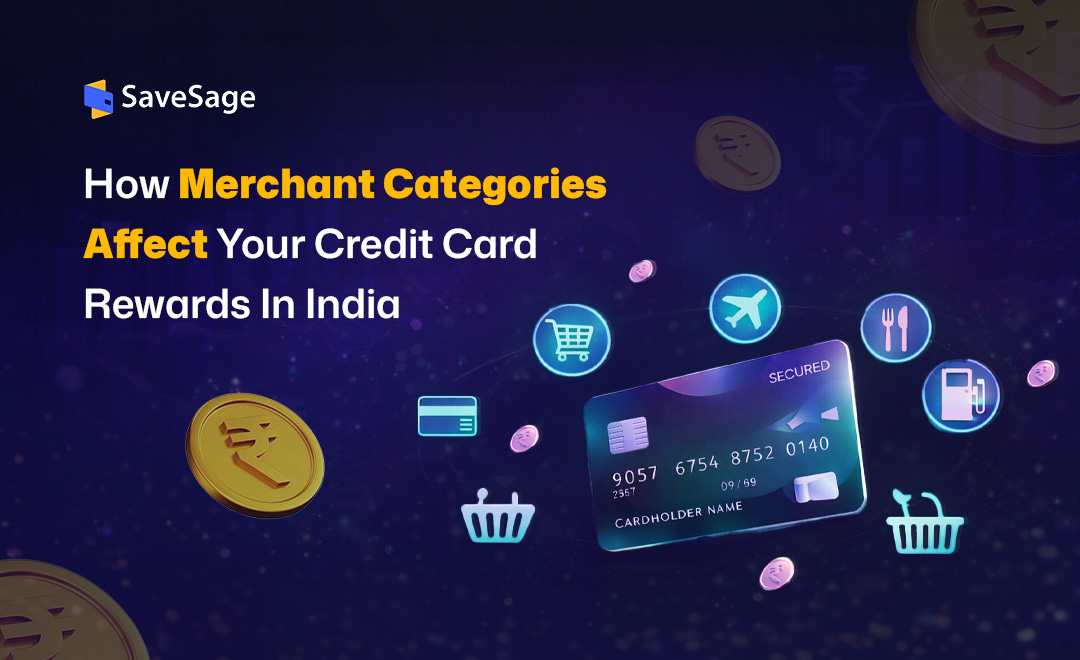
How Merchant Categories Affect Your Credit Card Rewards in India
Credit card rewards are not just about how much you spend, they’re also about where you spend. In India, merchant categories play a major role in determining how many credit card points, cashback, or miles you actually earn on a transaction.
If you’ve ever wondered why one purchase earned 5X points while another earned only base rewards, the answer usually lies in Merchant Category Codes (MCCs). Understanding how these work can significantly improve the value you extract from every swipe.
What Are Merchant Category Codes (MCCs)?
Every business that accepts card payments is assigned a Merchant Category Code (MCC) by payment aggregators like Razorpay, PayU, Paytm, Cashfree etc.
This 4-digit code tells your bank the type of business where you spent money.
For example:
Grocery stores have a different MCC than restaurants
Hotels differ from travel aggregators like MakeMyTrip
Wallet loads differ from direct merchant payments
Your card’s reward rate is triggered based on this MCC - not just the brand name.
Why Merchant Categories Matter for Credit Card Rewards
In India, most premium credit cards and certain cashback credit cards offer accelerated rewards for spending in certain categories like dining, travel, international transactions, online shopping, and groceries.
However, this bonus applies only if the transaction is tagged under the correct MCC.
For example:
Axis Atlas Card offers accelerated rewards on travel via Travel Edge or through direct airline and hotel websites not via online travel agencies (OTAs).
HDFC Infinia gives higher rewards when you book flights and hotels via SmartBuy portal.
If the MCC does not match the eligible category, you may earn only base rewards.
Common Situations Where Rewards Don’t Trigger
Payment Through Aggregators: When using third-party platforms like wallets or payment gateways (e.g. paying via Paytm or Google Pay), the MCC often reflects the aggregator, not the merchant, which could result in missing out on accelerated rewards.
Government & Utility Payments: Transactions like rent, insurance premiums, and school fees typically fall under MCCs that don’t earn rewards.
Fuel Transactions: Many cards exclude rewards on fuel or offer reduced points beyond a certain limit. In this case, you should use preferred credit cards for fuel payments in India.
Online vs Offline Differences: A grocery purchase made in-store might earn rewards under a "supermarket" MCC, while the same purchase online may be categorized differently, impacting your reward points.
Importantly, issuers do not always publish the full MCC list publicly. This makes tracking and optimization slightly complex for credit card users.
Where Can You Check the MCC?
You can identify the MCC through a few practical ways:
Ask your bank’s customer support for the MCC of a specific transaction
Refer to Visa or Mastercard’s published MCC lists for general classification
Note: Always check your card’s terms and conditions to understand how rewards are applied to different merchant categories.
Verifying the MCC can quickly clarify why a transaction earned accelerated rewards — or only base points.
How to Track and Optimise Your Rewards
Merchant categories directly determine how much you earn on every transaction. Two similar purchases can generate different rewards depending on the assigned MCC.
To maximise rewards:
Align spending with bonus categories
Monitor category caps and exclusions
Use different cards for different categories
Track and redeem rewards strategically
Small, consistent optimisations can significantly increase your overall returns
Most banks let you track spending and rewards through their own apps like:
HDFC MyCards
SBI Card App
Axis Mobile
ICICI iMobile
However, if you use multiple credit cards across banks, category wise optimization can become fragmented and hard to manage. This is where SaveSage comes in.
The SaveSage app brings all your cards into one place and helps you understand which credit card to use for which purchase, how many points you’re earning, and where you may be missing accelerated rewards. This makes card optimization more structured and efficient. Give a try and download the SaveSage Club app today.