





Can You Pay Income Tax with a Credit Card in India?
Paying income tax is something you cannot avoid. But the way you choose to pay it can make a difference, especially when the amount is large. In recent years, more taxpayers in India have started using credit cards for their tax payments. The idea sounds smart, get extra time to pay and possibly earn rewards. But does it really work that way?
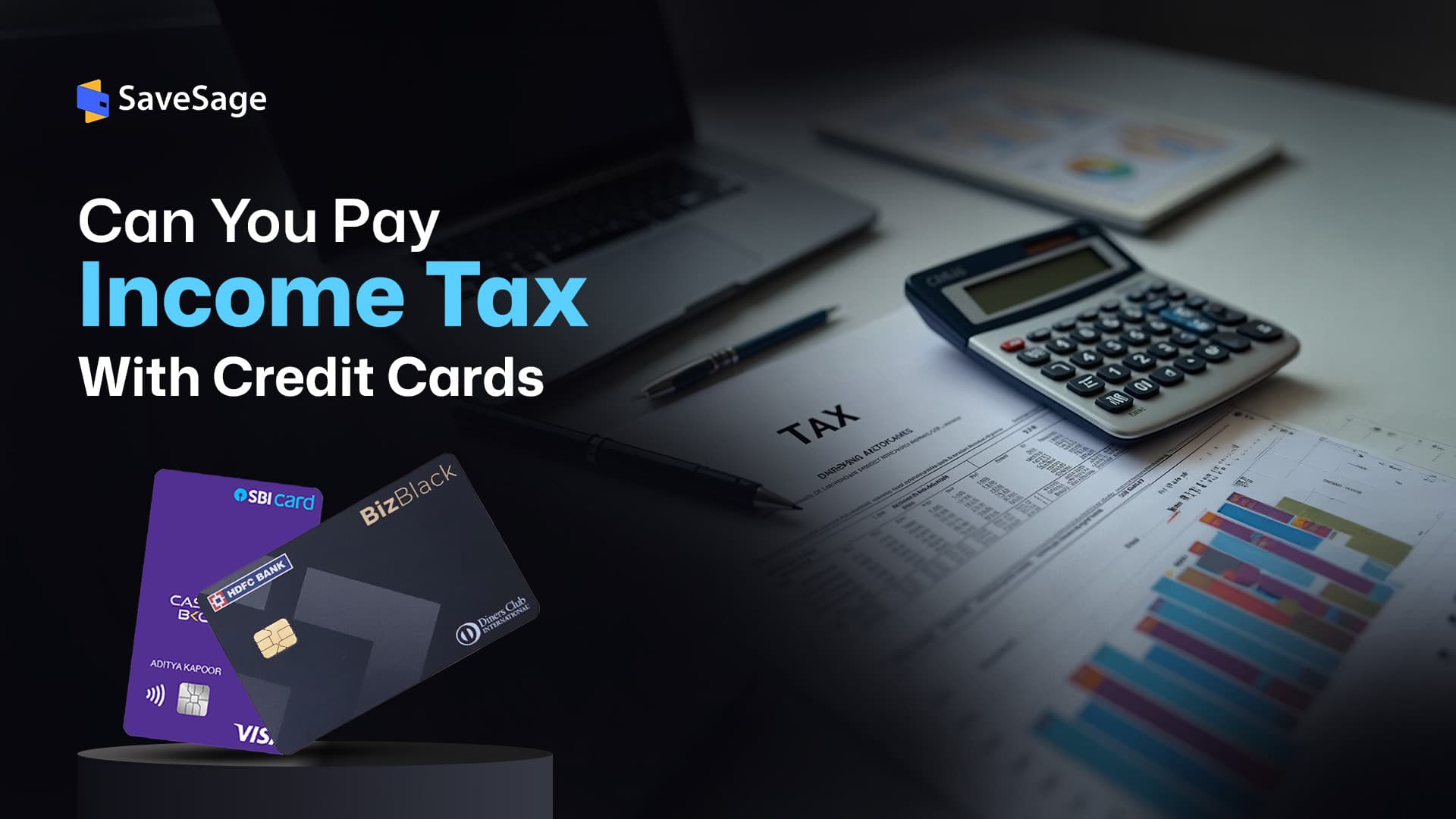
In reality, this only works if you choose the right card and understand the costs involved. Otherwise, you'll just be paying extra in convenience fees without getting anything back in return
Paying Income Tax via Credit Card in India: What You Need to Know
The Income Tax Department allows credit card payments through its official e-Pay Tax system via authorised payment gateways.
You can use a credit card to pay advance tax, self-assessment tax, regular tax dues, TDS & GST payments.
Earlier, this option was inconsistent or unavailable on older systems. However, on the current portal - credit card payments are supported across multiple gateways.
But still availability can vary depending on Payment gateway, Card network & Transaction type (advance tax, self-assessment, etc). However, this payment method comes with additional charges and specific limitations that you need to evaluate before proceeding.
How to Pay Income Tax with a Credit Card
The process is simple and similar to any online payment:
Visit Income Tax website
Login using your PAN number & password/OTP
Select e-File→ e-Pay Tax → New Payment → Select major head such as Advance Tax, Self Assessment Tax, TDS, etc.
Enter tax details (amount, assessment year, etc.)
Select “Payment Gateway (including Credit Card)”
Continue to review the details and proceed to Complete the payment.
Once the payment is successful, you will receive a Challan Identification Number (CIN) and a receipt which acts as proof of payment.
Charges on Credit Card Tax Payments
This is the most important part to understand before using a credit card.
Unlike UPI or net banking (which are usually free), credit card payments come with a processing fee charged by the payment gateway.
Typically, the charges are 0.85% including GST as processing fee. Some gateways may offer lower or promotional charges but these are not consistent.
Do Credit Cards Earn Rewards on Tax Payments
Standard and entry-level cards typically exclude government transactions from rewards. If you pay tax on an everyday card, you earn nothing and only pay the processing fee.
Premium and business cards earn real rewards on tax payments. Several earn 2 to 3 percent with no cap. The HDFC Biz Black earns up to 16.5 percent on tax payments. For someone paying a large advance tax amount on the right card, the rewards earned comfortably outweigh the processing fee by a significant margin.
Even beyond rewards, using a credit card can still make sense as:
Interest-Free Period
You get up to 45 days of credit, which helps delay cash outflow-useful for large payments.
Rewards (in Select Cases)
Some cards, especially business or premium ones,may still offer base or accelerated rewards. When done right, your returns can be even higher than 15%
Milestone Benefits
Even though most of the common cards out there exclude Government transactions from eligible categories for rewards, some still count it towards the milestone. Best example: HDFC Marriott Bonvoy credit Card
Best Credit Cards for Paying Income Tax in India
HDFC Biz Black
Annual Fee: ₹10,000
Base Return: 3.3%
Accelerated: up to 16.5%
Capping: Accelerated: 7500 RP per month
Capping Base: 1.5L RP per month
This is one of the most rewarding cards for tax payments, since it continues to give base reward even after you hit the capping for accelerated points. Even after fees, it can generate strong value.
HSBC Premier
Joining Fee: ₹12,500
Renewal Fee: 20000 (waived for Premier users)
Reward Rate: 3%
Cap: 3,000 RP per month for certain categories
YES Private Credit Card
Joining Fee: ₹50,000 (Compensated with a Welcome Bonus of 2L RPs + Rs 9,000 Oberoi voucher)
Renewal Fee: ₹10,000
Reward Rate: 2.5%
Uncapped
The uncapped earning is the biggest advantage here for large tax payments. Most capped cards limit your upside once you cross a threshold. YES Private does not.
SCB Smart Credit Card
Annual Fee: ₹500
Reward rate: 2%
Cap: ₹1,000
A simple option for smaller tax payments where premium cards are not required.
Kotak Solitaire
Joining Fee: Nil
Annual Fee: Nil (₹25,000 will be charged if downgraded from Kotak Solitaire Program)
Reward Rate: 3%
Cap: Uncapped
While this card may look good on paper, it has a very high TRV requirement ₹75 lakh+ for salaried or ₹1 crore+ for self-employed individuals.
Most folks who can meet this requirement can usually get better cards as well.
ICICI Times Black
Annual Fee: ₹20,000
Reward Rate: 2%
Cap: 5,000 RP per month
While this card is generally not recommended due to high fees. This often remains as one of the only options for people with limited eligibility. If you already have this card or it makes sense for your other expenses as well, then it can be used for the tax payments.
HDFC Marriott Bonvoy
Annual Fee: ₹3,000
No base rewards
1.8% value via milestones
This card practically stays free due to it's joining and renewal benefit. While spending heavily on this card is usually not recommended, here it makes perfect sense.
Note: 1 Marriott Point value assumed at ₹0.6
When Should You Use a Credit Card for Tax Payments
Use a credit card if:
You can pay the full bill on time
Your card gives rewards or milestone benefits
Your return is higher than 1% fee
You want short-term liquidity (up to 45 days)
Avoid using a credit card if:
Your card gives zero rewards
You are close to your credit limit
Track Your Payments and Card Usage
Tax payments are not frequent, but they are significant.
Using the wrong card here can directly cost you thousands of rupees in fees without any return. On the other hand, using the right card can turn the same payment into rewards, travel benefits, or milestone unlocks.
With SaveSage, you can see which credit card gives you the best return for each transaction and avoid unnecessary fees. It helps you make decisions based on real returns instead of assumptions.